
Realtor Virtual Receptionist: Never Miss Another Buyer Lead
A realtor virtual receptionist is an AI-powered phone agent that answers every inbound call to your real estate business 24/7, qualifies the buyer or seller in real time, books showings directly into your calendar, and sends the caller a text and email recap — all without you picking up the phone. It handles the calls you can't, so no lead goes to voicemail and no deal starts cold.
- 82% of real estate agents now use AI tools in their business, yet most still send buyer calls to voicemail after hours.
- A realtor virtual receptionist answers in under one second and qualifies urgency, property interest, and budget before the caller hangs up.
- Setup takes under 15 minutes — no technical expertise, no new phone system, no rip-and-replace.
- Human receptionist costs run $30,000–$60,000 per year; an AI answering service runs $600–$4,800 per year.
The Missed Call Problem in Real Estate
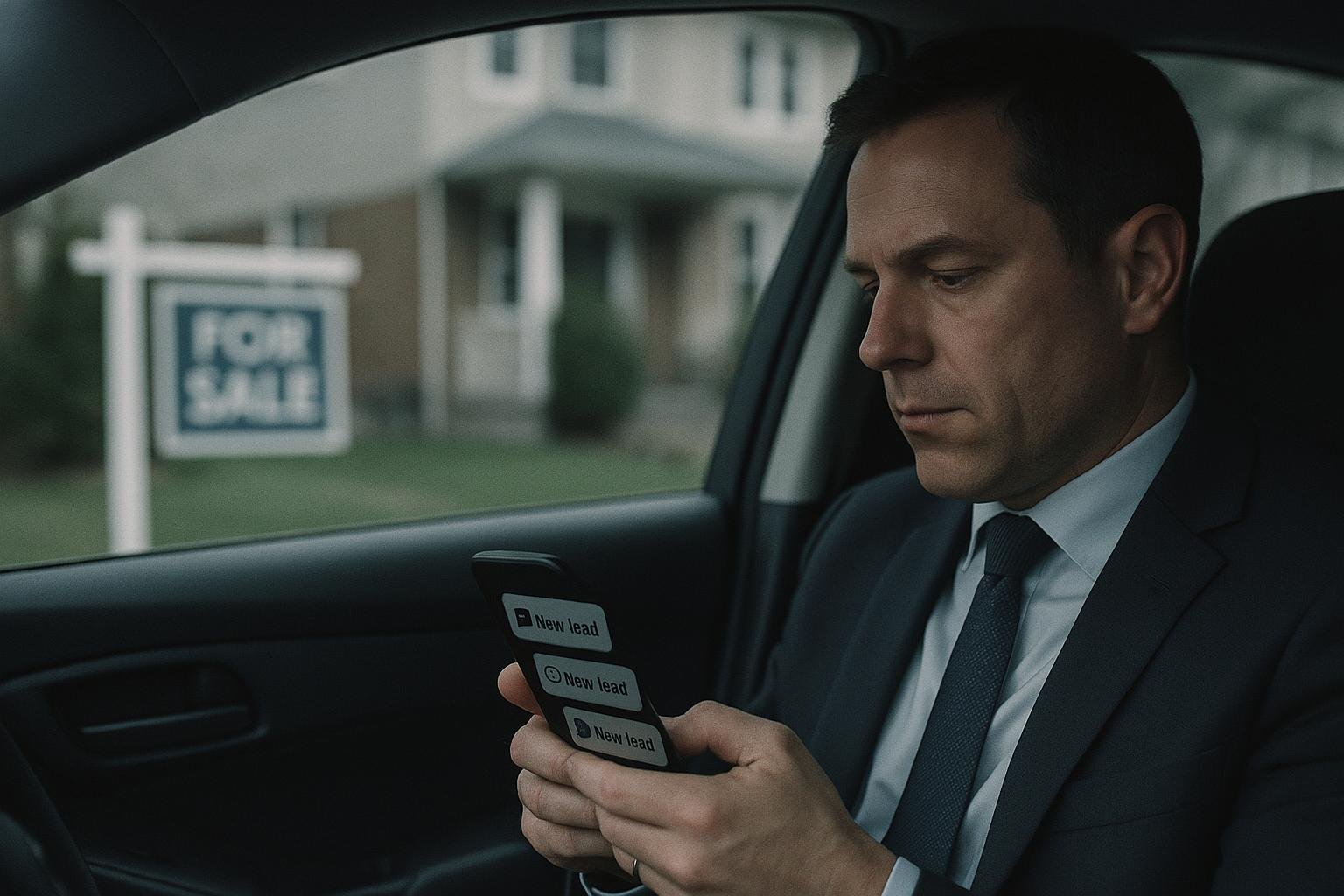
It's 7:15 PM on a Thursday. You're at a closing that ran long. Your phone's been buzzing for the last forty minutes and you haven't looked at it once. Back in the car at 8:00 PM, you see three missed calls — two unknown numbers and one from a contact labelled "open house inquiry." No voicemails. All three called once and didn't leave a message.
That's not a minor inconvenience. That's potentially a first-time buyer who drove past your listing sign, got excited, and called the number on it. When you didn't answer, they called the next agent whose sign was two streets over.
This happens constantly in real estate. According to industry data, 62% of calls to small businesses go unanswered. For realtors, the cost isn't just a lost showing — it's the entire commission chain: the listing, the offer, the referral that follows. A single buyer lead in a mid-tier market can represent a $12,000–$18,000 commission. Three of those a month, and you're talking about real money left on the table every quarter.
What a Missed Buyer Call Actually Costs You
Most agents don't track this number, which is exactly why it keeps bleeding. Think about your own call patterns. How many calls come in while you're showing a property? How many come in after 6:00 PM — the window when buyers are off work and actually browsing Zillow? How many come in on Saturdays when the open house sign is out but you're running the open house yourself?
The answer, for most solo agents and small teams, is: a lot. And voicemail doesn't help. Buyers in 2026 do not leave voicemails. They hang up and call someone else, or they go back to the listing portal and click on the next agent's contact button.
The real cost of a missed call isn't the call. It's the buyer relationship you never started.
There's also the seller side of this. A potential seller researching listing agents calls three people. The one who answers first — or whose system answers first and schedules the consultation — usually gets the listing. A realtor virtual receptionist means you're always the one who answered first, even at 9:30 PM on a Sunday.
Here is exactly what happens when a call hits voicemail instead of an AI agent — and why buyers don't wait.
Why Realtors Keep Losing Calls
It's not that realtors don't care about their phones. It's that the job makes it structurally impossible to be available 100% of the time. You're in showings. You're in negotiations. You're driving between appointments. You're at a listing presentation trying to make a good impression — which means your phone is face-down on the table.
The traditional fix has been a human receptionist or answering service. But here's the problem with that: a traditional answering service costs $300–$500 per month at the low end, and all they do is take a message. They can't answer questions about the property. They can't book the showing directly into your calendar. They can't tell the buyer what the asking price is or confirm whether pets are allowed. They take a name and a number, and then you call back — sometimes hours later, sometimes the next morning.
By then, the lead is cold. Or gone.
The mechanism that keeps breaking this is simple: there's a gap between when a buyer is motivated to act and when a realtor is available to respond. Every tool that fills that gap with a human creates a bottleneck. The only way to close the gap completely is to put something intelligent there that can act on your behalf in real time.
How Does a Realtor Virtual Receptionist Work?
A realtor virtual receptionist built on AI — like the one we've built at CallagentAI — works like this: the call comes in, the AI answers in under one second with your custom greeting, and then it gets to work.
It knows your listings. It knows your service area. It knows your hours, your preferred showing windows, and what questions buyers typically ask about the properties you represent. You train it once — takes about 15 minutes — and it handles every call from there.
Here's what it does on a real buyer call:
- Answers immediately — no rings, no voicemail prompt, no "please hold"
- Greets the caller by your brand — "Thanks for calling [Your Name] Real Estate, how can I help you today?"
- Qualifies the inquiry — which property, buyer or seller, timeline, financing status, urgency level
- Books the showing or consultation — direct integration with Cal.com means the appointment lands in your calendar while the caller is still on the phone
- Captures the lead — name, phone, email, property interest, and any custom fields you want
- Sends a confirmation loop — automatic text and email recap to the caller, confirming what was discussed and what happens next
- Transfers to you — if the caller wants a live conversation right now and you're available, it routes the call through
You can see the full call breakdown — transcript, recording, call summary — in your dashboard the moment the call ends. Nothing sits in a voicemail inbox waiting for you to listen to it.
Check out the full feature set if you want to see how the qualification and booking flow works in detail.
Does a Realtor Virtual Receptionist Work With Your Existing Tools?
This is the question I get most from agents who are already running a CRM or a transaction management platform. The honest answer: yes, and you don't have to change anything you're already doing.
CallagentAI connects natively to Zoho CRM — so every qualified lead from a call gets created as a record automatically, no manual data entry. If you run a different CRM, the webhook integration pushes structured call data — caller name, phone, email, property interest, urgency — into any system that accepts it. If you're using something like Follow Up Boss or LionDesk, you can wire that webhook through Zapier and have the lead appear in your CRM without anyone typing it in.
No rip-and-replace. No new system to learn. Your team wakes up to leads that are already in the pipeline, already confirmed to the buyer, already scheduled in the calendar.
For agents running a WordPress site, the WordPress plugin puts a voice and chat widget directly on your listings pages — so a buyer browsing your site at 11 PM can start a conversation right there without picking up the phone.
You can see everything that connects on the integrations page.
Cost Comparison: AI vs. Human Receptionist
Let's put some numbers on this. According to the Bureau of Labor Statistics, a full-time receptionist earns roughly $35,000–$45,000 per year before benefits, payroll taxes, and PTO. For a solo agent or a small team, that's not realistic.
A traditional answering service — humans taking messages — runs $300–$500 per month and still requires you to call back every lead manually. An AI answering service runs $50–$400 per month depending on call volume, and it does everything the human service does plus qualification, booking, CRM sync, and the confirmation loop.
| Option | Annual Cost | Books Showings? | 24/7 Coverage? | CRM Sync? |
|---|---|---|---|---|
| Full-time human receptionist | $35,000–$60,000 | Sometimes | No | Manual |
| Traditional answering service | $3,600–$6,000 | No | Limited | No |
| CallagentAI realtor virtual receptionist | $600–$4,800 | Yes — live booking | Yes, always | Automatic |
The math isn't subtle. An AI realtor virtual receptionist costs 87–97% less than a full-time hire and does more. And unlike a human hire, it doesn't take sick days, doesn't have a bad Thursday, and doesn't leave at 5 PM when buyers in your market are just sitting down to scroll listings.
Honestly, the question for most agents isn't whether they can afford it. It's whether they can afford not to have it. One additional closing per year — which a single recovered lead can produce — pays for the service many times over. See the pricing page for current plan details.
Picture a solo agent covering a busy suburban market. She's doing 18–22 transactions a year. Her phone gets maybe 12–15 inbound calls a week from a mix of buyers, sellers, and tire-kickers. On a typical Tuesday evening she's finishing a showing at 7 PM and misses two calls — one from a first-time buyer asking about a listing she put up that morning, one from a relocating couple who found her on Google. With a realtor virtual receptionist in place, both callers get answered immediately. Both get their questions answered. The buyer looking at the morning listing gets a showing booked for Thursday. The relocating couple gets a consultation scheduled for Saturday. She gets to her car at 7:15 PM, opens her dashboard, and sees two new qualified leads — names, numbers, emails, what they're looking for, and appointments already on her calendar.
That is what operational closure actually looks like. Nothing pending. Nothing following up in the morning. The loop is closed before she drives home.
Frequently Asked Questions
What does a realtor virtual receptionist actually do on a call?
A realtor virtual receptionist answers inbound calls 24/7, greets callers with your custom script, qualifies the inquiry — buyer, seller, property interest, timeline — books showings or consultations directly into your calendar, captures the lead's contact details, and sends both you and the caller a text and email confirmation. It transfers to a live agent when needed.
Will callers know they're talking to an AI?
Most callers won't notice unless they ask directly. CallagentAI uses natural-sounding AI voices — 30-plus options — trained on your business information so responses feel specific, not scripted. The agent knows your listings, your name, your service area, and how you want to handle different inquiry types. It sounds like a knowledgeable team member, not a phone tree.
Can a realtor virtual receptionist book showings in my calendar?
Yes. CallagentAI integrates directly with Cal.com for live appointment booking during the call. The caller picks a time, it lands in your calendar, and both sides get an automatic text and email confirmation. No double-booking, no back-and-forth follow-up, no manual entry required on your end.
How long does setup take?
Under 15 minutes for a basic setup — you provide your business information, FAQs, and preferred call handling instructions. The AI trains on that content immediately. You can update it yourself anytime: change your greeting, adjust your hours, add a new listing's details. No technical background required and no waiting for a vendor to make changes for you.
Does it work with my existing CRM?
CallagentAI connects natively to Zoho CRM for automatic lead creation. For other CRMs — Follow Up Boss, LionDesk, or any platform that accepts data — the webhook integration pushes structured call data out after every call. You can wire that into your preferred app through Zapier or Make without writing any code or changing how your team works today.
What does a realtor virtual receptionist cost compared to a human receptionist?
A full-time human receptionist costs $35,000–$60,000 per year including benefits. A traditional answering service runs $3,600–$6,000 per year and only takes messages. CallagentAI costs $600–$4,800 per year depending on call volume — and books showings, syncs to your CRM, and sends confirmation texts automatically. That is an 87–97% cost reduction for more capability.