
Why Spring Is Peak Season for Missed Roofing Leads
A roofing answering service is the single most important tool a roofing contractor can deploy before storm season hits. When hail drops across three counties and your phone starts ringing at 7 AM, the companies that answer every call book every estimate. The ones that don't — hand 20% of their spring pipeline straight to whoever did pick up.
- Spring storm surges can double or triple inbound call volume overnight — most crews can't keep up.
- 62% of calls to small businesses go unanswered, according to industry research — in roofing, that number spikes further during weather events.
- An AI roofing answering service costs $300–$500/month versus $3,000–$4,000/month for a full-time receptionist.
- Every unanswered call is a qualified, motivated buyer who already needs a roof — and will call the next result on Google.
The Storm Scenario Every Roofer Knows
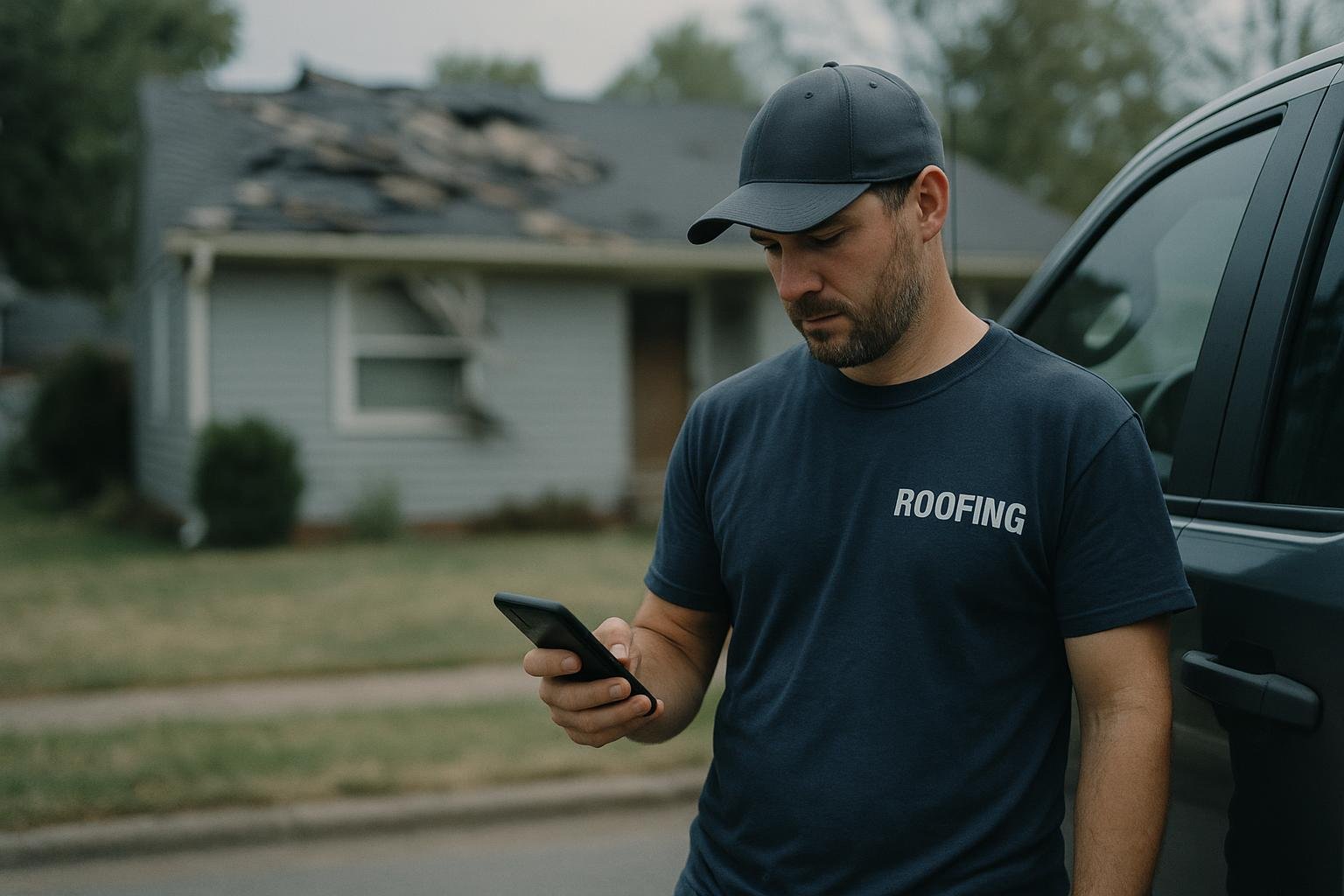
It's a Tuesday in April. A line of storms rolls through overnight — hail the size of quarters, wind gusts pushing 60 mph. By 7:15 AM your phone is already lit up. By 8:30 AM you've got twelve missed calls and a voicemail box that's full.
You're not at the office. You're on a residential job in the next town over, trying to wrap up a project from last week before the ground softens again. Your office manager is juggling three insurance adjuster calls and two material deliveries. Nobody is answering the phones. And every single one of those callers? They already have a damaged roof. They're not tire-kickers. They're ready to book.
Sound familiar? Every roofing contractor I've talked to has lived this exact morning. Some version of it hits every spring, and it costs real money every single time.
What a Missed Call Actually Costs in Spring
Here's the part most people underestimate. A missed roofing call in spring isn't a missed lead — it's a missed job that's already half-sold. Storm-damaged homeowners aren't shopping around for months. They want someone out that week. If you don't answer, they call the next roofer on Google. That second call usually gets picked up, and the job goes there.
An average residential roof replacement runs $8,000–$15,000. A hail-damage claim with insurance often goes higher. If storm season sends you 80 inbound calls over three weeks and you miss 20% of them — that's 16 jobs you didn't even quote. At $10,000 average job value, that's $160,000 in revenue that walked out the door before you even knew it called.
That's not a staffing problem. That's a systems problem. And it's completely fixable.
Why It Keeps Happening Every Single Year
Roofing is one of the most seasonal trades there is. You spend January and February doing light maintenance, following up on stragglers from the previous fall. March picks up. Then April hits and you go from 20 calls a week to 80 calls a week in about ten days. There's no ramp. It's a wall.
Most roofing operations are built to handle the steady-state, not the spike. One office manager. Maybe a part-time scheduler. A voicemail system that fills up fast. None of that scales when a storm event hits three counties at once and every homeowner in the area is Googling "roof damage estimate" at the same time.
You can't hire fast enough. You can't train a temp in time. And you definitely can't be on the roof and on the phone simultaneously. So the calls pile up, voicemail fills, and motivated buyers — people who already need exactly what you sell — quietly dial someone else.
The mechanism is simple: demand surges instantly, capacity doesn't. The fix has to be something that scales without hiring.
How Does a Roofing Answering Service Work?
A roofing answering service using AI answers every inbound call in under one second, 24 hours a day, seven days a week — regardless of how many calls come in at once. There's no busy signal. No voicemail. No "we'll call you back."
Here's what actually happens on the call. The AI greets the caller with your business name and your custom opening. It asks what they're calling about — storm damage, a routine estimate, a leak, a repair. It qualifies the situation in real time: is this an emergency (active leak, structural concern) or a standard estimate request? It captures the caller's name, address, phone number, email, and the specific issue they're describing.
For estimate requests, it can book directly into your calendar through Cal.com — so the caller gets a confirmed appointment slot before they hang up. No callback needed. No follow-up tag. The job is booked.
After the call, the system sends the caller an automatic text and email recap: what was discussed, what happens next, and when to expect you. That confirmation loop matters more than most people realise. It tells the homeowner the call was heard, the job is real, and you're coming. That's how you stop them from calling the next roofer anyway.
You can see the full capability set on the CallagentAI features page — the short version is that it handles the intake process your office manager doesn't have time for during a storm surge.
Before and After: What Spring Looks Like with AI
| Scenario | Without a Roofing Answering Service | With a Roofing Answering Service |
|---|---|---|
| Storm hits overnight | Voicemail fills by 8 AM | Every call answered instantly |
| 80 inbound calls in 3 weeks | ~16 missed, 16 jobs lost | All 80 captured, qualified, booked |
| Emergency leak call at 9 PM | Goes to voicemail; caller dials competitor | Qualified, flagged urgent, confirmation sent |
| Monthly cost | $3,000–$4,000 for a full-time receptionist | $300–$500/month for AI coverage |
| Caller follow-up | Manual callback list, often delayed | Automatic text + email recap after every call |
The cost difference alone should settle this. A human receptionist runs $30,000–$60,000 a year according to BLS salary data. An AI answering service runs a fraction of that — and it handles unlimited simultaneous calls. During a storm event, that concurrency matters enormously. Your human receptionist handles one call at a time. The AI handles thirty.
Does It Work with the Tools I Already Run?
This is the question I get most often, and it's the right one to ask. A roofing answering service only makes sense if the data it captures actually flows into how you operate — not into a silo you have to check separately.
Here's how CallagentAI handles it. Every call produces structured data: caller name, phone, address, issue type, urgency level, and any custom fields you configure. That data gets pushed out via webhook in real time. If you run your scheduling and job management through a platform like Jobber, you can wire that webhook through Zapier or Make and have the intake fields populate a new record automatically — so your dispatcher sees a structured job entry instead of a voicemail they have to transcribe.
If you use Zoho CRM, there's a direct native integration — the lead gets created automatically without any middleware. For Cal.com users, appointment booking happens live on the call. The full picture of what connects to what is on the CallagentAI integrations page.
The point is this: the call produces clean, structured data that goes where your workflow already is. Nobody types anything twice. No voicemail sits in a queue waiting for someone to listen to it. The job moves forward the moment the call ends.
I'll be blunt — this is the part that changes how a roofing operation actually feels during storm season. It's not about the AI being impressive. It's about your dispatcher having real information, immediately, without chasing it down.
The Real ROI Before You Even Get to June
Look at the math from the other direction. If your CallagentAI plan runs $400 a month and it captures one additional roofing job you would have missed — one job worth $10,000 — that's a 25x return on that month's spend. In spring, during a storm surge, you're not capturing one extra job. You're capturing the 16 you were losing every season without realising it.
The virtual receptionist market is growing at nearly 10% annually, according to industry research, and over 60% of US small businesses have now adopted AI tools for customer interactions. The roofing contractors setting themselves up to win the next five springs aren't the ones with the best crews — they're the ones whose phones never go to voicemail.
If you want to see how the intake flow actually works before committing to anything, the CallagentAI demo page walks through a live call scenario. It takes about ten minutes. Worth the look before storm season hits.
Frequently Asked Questions
What is a roofing answering service?
A roofing answering service is an AI-powered phone system that answers inbound calls for roofing contractors 24/7, qualifies the caller's situation (storm damage, routine estimate, emergency leak), captures their contact details, books appointments, and sends an automatic text and email recap — without any human staff involvement.
How much does a roofing answering service cost?
An AI roofing answering service typically costs $300–$500 per month, compared to $3,000–$4,000 per month for a full-time human receptionist. That's roughly a 90% cost reduction for coverage that handles unlimited simultaneous calls, including nights and weekends when storm-damage callers are most likely to reach out.
Can it handle the call volume during a spring storm event?
Yes — and this is where AI has a structural advantage over human staff. An AI roofing answering service handles unlimited concurrent calls with no busy signals and no hold times. During a storm surge when 30 homeowners call within the same hour, every one of them gets answered immediately, qualified, and captured as a structured lead.
Will it integrate with the job management software I already use?
CallagentAI connects natively to Zoho CRM and Cal.com for live appointment booking. For other platforms like Jobber or ServiceTitan, the call data is pushed out via webhook, which you can wire to your platform through Zapier or Make — so the intake fields populate automatically without anyone typing them in manually.
What happens after the AI takes the call?
After every call, the system automatically sends the caller a text message and email recap covering what was discussed, what happens next, and any booking confirmation. This confirmation loop reduces follow-up calls, prevents the homeowner from calling a competitor, and gives your team a clean record of every intake conversation in real time on the call dashboard.
Is it hard to set up before storm season?
No — CallagentAI is configured in under 10 minutes with no technical expertise required. You provide your business information, FAQs, service area, and custom greeting. The AI is trained on that information immediately. Most roofing contractors are live and answering calls the same day they sign up, well ahead of any spring storm surge.