
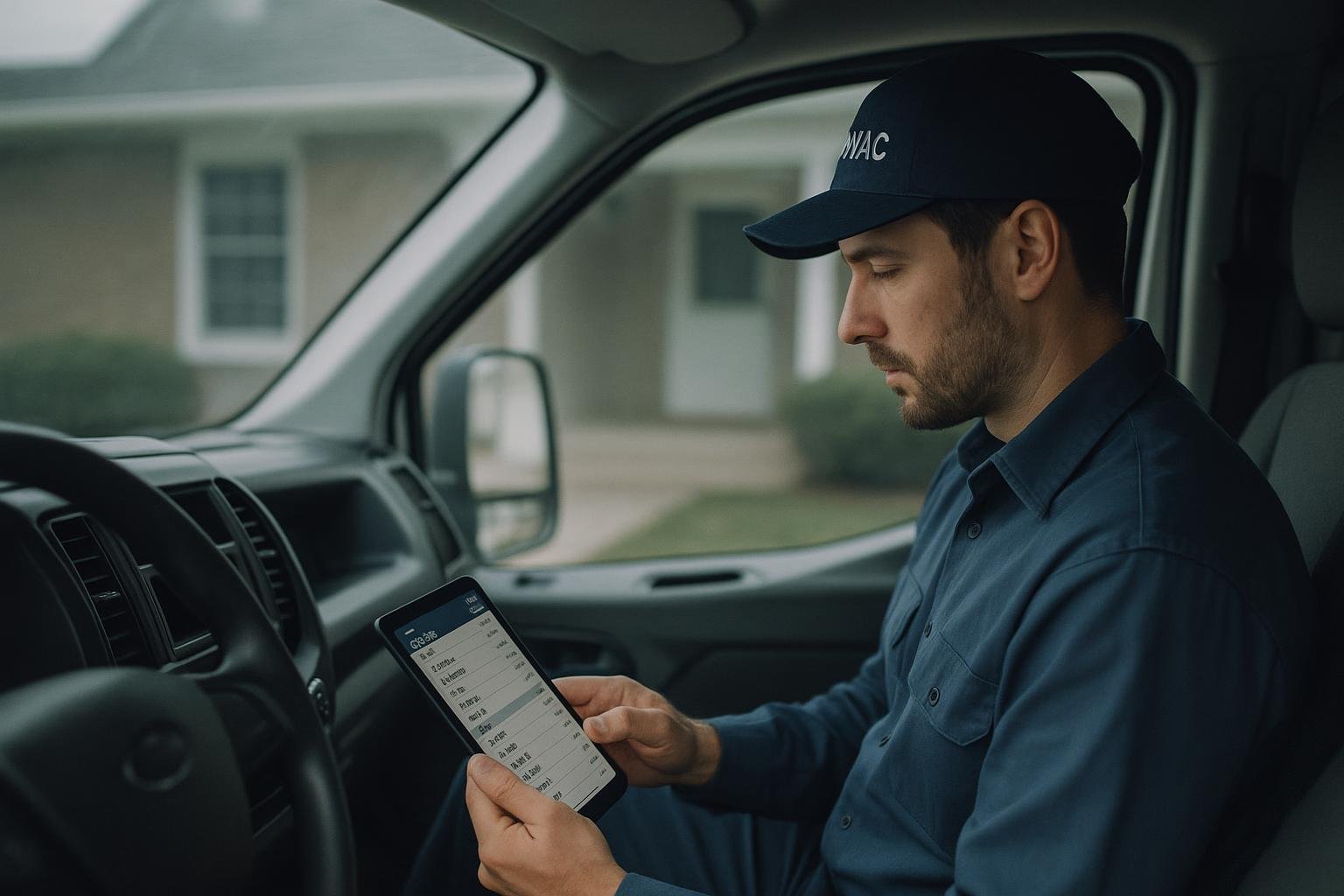
HVAC Seasonal Peaks: Handle Double Your Call Volume Without Hiring
An hvac seasonal call surge hits twice a year like clockwork — the first serious cold snap in November and the first brutal heat wave in June — and both times, your phone becomes a liability instead of an asset. The businesses that answer every call keep the jobs. The ones that don't hand them straight to a competitor who picked up on the second ring.
- HVAC businesses face call volumes that double or triple during seasonal peaks, with no warning and no ramp-up time.
- Hiring temporary staff for a 6-week surge is expensive, slow, and unreliable — most temps are gone before they're useful.
- AI voice agents answer every call instantly, qualify urgency in real time, and book the job — 24 hours a day, 7 days a week.
- The call produces structured data that flows straight to your dispatcher, so nothing sits in voicemail waiting for someone to listen to it.
The call you missed at 11 PM
It's July 14th. Heat index is 105. You've got six techs out, the dispatch board is full, and your office phone has been ringing since 7 AM without a pause. Your service coordinator went home at 5. The calls kept coming anyway.
At 11:07 PM, someone's AC dies. They've got a 78-year-old mother in the house. They call you first — because you've done their system for three years and they trust you. They get voicemail. They hang up and Google "emergency AC repair near me." Your competitor two towns over picks up on the first ring. That customer is gone. Not just this job — probably for good.
That's not a hypothetical. That's Tuesday in the middle of an HVAC seasonal call surge.
What a missed call actually costs you
Let's be blunt about the money. An emergency AC call in peak summer is worth $400–$800 in same-day service revenue, minimum. A no-heat call in January is the same. But the real hit isn't the single job — it's the account. A customer who couldn't reach you in an emergency doesn't quietly come back in spring for a tune-up. They're already signed up with whoever answered that night.
According to research covered by the Forbes small business team, roughly 62% of calls to small businesses go unanswered during peak periods. For an HVAC company running a seasonal surge, that number is probably conservative. You're not slow to answer — you're simply overwhelmed. There are 4 calls happening and 1 person to take them.
For residential HVAC, the math adds up fast across a 6-week summer surge. For commercial accounts — a facilities manager running 12 properties against strict response SLAs — the stakes are higher. One missed call from that FM isn't a lost job. It's a contract review conversation you don't want to have.
Why the surge keeps beating you
Here's the honest answer: the problem isn't your team. It's the structure of the demand.
An HVAC seasonal call surge doesn't arrive gradually. It arrives the morning after the first real weather event — a hard freeze, a heat advisory, a thunderstorm that knocks out half the neighborhood's outdoor units. Overnight your call volume goes from 40 calls a day to 120. You don't have three weeks to hire and train someone. You have 48 hours before the backlog is so deep that customers start canceling and calling someone else.
Hiring temps sounds logical until you actually do it. Recruiter fees, training time, the reality that a temp answering your phones has no idea what "refrigerant leak" means versus "capacitor failure" versus "needs a full system replacement." They take a message. The message sits. The urgency is lost. And half the time the temp quits after week two because dispatch season is genuinely chaotic.
The mechanism keeping you stuck is simple: demand is spiky and unpredictable, and human staffing is the opposite — slow to scale up, expensive to keep, and impossible to scale back down when the surge ends.
How does AI handle an HVAC seasonal call surge?
An AI voice agent handles an HVAC seasonal call surge by answering every inbound call in under one second, asking the right qualification questions in real time, separating emergency calls from routine requests, and either booking the job directly or routing the call to a human — all without voicemail, hold music, or a busy signal.
Here's what that looks like in practice. A caller rings in at 10 PM saying their furnace isn't producing heat. The agent asks: is there heat at all, or no heat? How long has it been out? Anyone in the home with medical needs? It captures the caller's name, address, phone, and the urgency level. If it's an emergency, it transfers to your on-call tech immediately. If it's a next-morning job, it books a time slot through your calendar and sends the caller a text confirmation. Your dispatcher wakes up to a list of structured, qualified jobs — not a voicemail folder with 23 messages of varying urgency.
CallagentAI is built to do exactly this. It answers every call 24/7, trains on your specific FAQs and service areas, and handles the qualification conversation in natural language. It supports 30+ voices and runs in English, Spanish, French, and more — which matters if you're in a market with bilingual callers. Here's what an AI receptionist actually sounds like on a real call:
What does it cost compared to hiring?
This is the question I get most often. So let me put it in a table.
| Option | Monthly Cost | Availability | Concurrent Calls | Scales With Surge? |
|---|---|---|---|---|
| Temp receptionist | $2,500–$4,000 | Business hours only | 1 at a time | No — weeks to hire |
| Traditional answering service | $400–$900 | 24/7, but limited | Variable, often queued | Partially |
| AI voice agent (CallagentAI) | $50–$400 | 24/7/365, always on | Unlimited, simultaneous | Yes — instantly |
A human receptionist running full-time costs $30,000–$60,000 per year according to BLS data on receptionist compensation. An AI answering service runs $600–$4,800 per year — an 87–97% reduction in cost for the same coverage. And unlike a temp, the AI doesn't quit two weeks into surge season. See the full pricing breakdown here.
The handoff your dispatcher actually gets
The part I want to make clear — because this is where most "phone answering" solutions fall short — is what happens after the call ends.
A traditional answering service takes a message and emails it to you. That email might arrive at 11 PM. Someone reads it at 7 AM. The customer has already moved on.
With CallagentAI, the call ends and the data moves immediately. Every call produces structured fields: caller name, phone, address, problem description, urgency level, preferred callback time. That structured data pushes out via webhook — so if you're running dispatch software, you can wire the webhook through Zapier or Make and have that job populate automatically, without anyone retyping a voicemail. No native connector required, no rip-and-replace of your existing stack. Check the full integrations page for how the data path works.
And the caller gets a text and email confirmation immediately after the call — what was discussed, what happens next, what time the tech is coming. That confirmation loop is the part that actually protects the relationship. The customer knows they weren't ignored. They're not calling back an hour later to check. They're waiting for the tech who's already booked.
That's the difference between a call answered and a job closed. During an HVAC seasonal call surge, that difference is the margin between a great season and a lost summer.
Honestly, the businesses I've seen struggle most with surge season aren't struggling because their techs are bad or their prices are wrong. They're struggling because the phone is the bottleneck — and they've never found a solution that actually scales with demand without scaling the payroll too. The full feature set is built around that exact problem.
Frequently Asked Questions
Can an AI voice agent really handle HVAC emergency calls at 2 AM?
Yes. An AI voice agent answers every call in under one second, 24/7/365. It qualifies the urgency in real time — asking about heat presence, medical needs in the home, how long the system has been down — and either transfers to your on-call tech immediately for true emergencies or books a next-available slot for routine service requests.
What happens to the call data after the AI answers?
Every call produces structured fields — caller name, phone number, address, problem description, urgency level — that push out via webhook immediately after the call ends. You can route that data into your dispatch system through Zapier or Make without any manual re-entry. The caller also receives an automatic text and email recap so they know what was agreed.
How quickly can I get an AI answering service set up before the season hits?
CallagentAI can be configured and live in under 15 minutes. You train it on your business information, FAQs, service areas and call routing rules — no technical expertise required. That means you can deploy it the morning a weather event is forecast, not weeks later after a hiring process has run its course.
Will callers know they're talking to an AI?
Most callers interact naturally without noticing. CallagentAI offers 30+ natural-sounding voices and handles interruptions, follow-up questions, and conversational flow in a way that feels responsive. That said, you can configure the agent to be transparent about being an AI if your brand requires it — complete control over the greeting and script is yours.
How does this compare to hiring a temp for surge season?
A temporary receptionist costs $2,500–$4,000 per month, handles one call at a time, works business hours only, and takes 2–3 weeks to hire and onboard. An AI agent costs $50–$400 per month, handles unlimited concurrent calls, works 24/7, and is live in minutes. It also doesn't quit mid-surge, which is the part that keeps me up at night with temps.
Does CallagentAI work with the scheduling and CRM tools I already use?
CallagentAI has a native integration with Cal.com for live appointment booking during the call, and Zoho CRM for automatic record creation. For other platforms — ServiceTitan, Jobber, and similar — the webhook data path connects to those systems through Zapier or Make, so the job data lands in your system without a direct connector or any manual entry.