Why HVAC Contractors Lose Emergency Jobs to Better Phone Systems
An hvac answering service is the difference between landing a $5,000 emergency service call and watching it go to the competitor who picked up first. When a commercial client's system goes down at 11 PM in January, they call whoever is at the top of their contact list — and they give that call exactly one shot. If it hits voicemail, they're already dialing the next number.
- 62% of calls to small businesses go unanswered — in HVAC, each one can be a $5K+ service call.
- Commercial facilities managers don't leave voicemails; they dial the next contractor on the list.
- An AI-powered answering service qualifies the emergency, captures the details, and triggers your dispatcher — automatically.
- The confirmation loop (automatic text + email recap) documents your response and protects the contract relationship.
The Moment That Costs You the Job
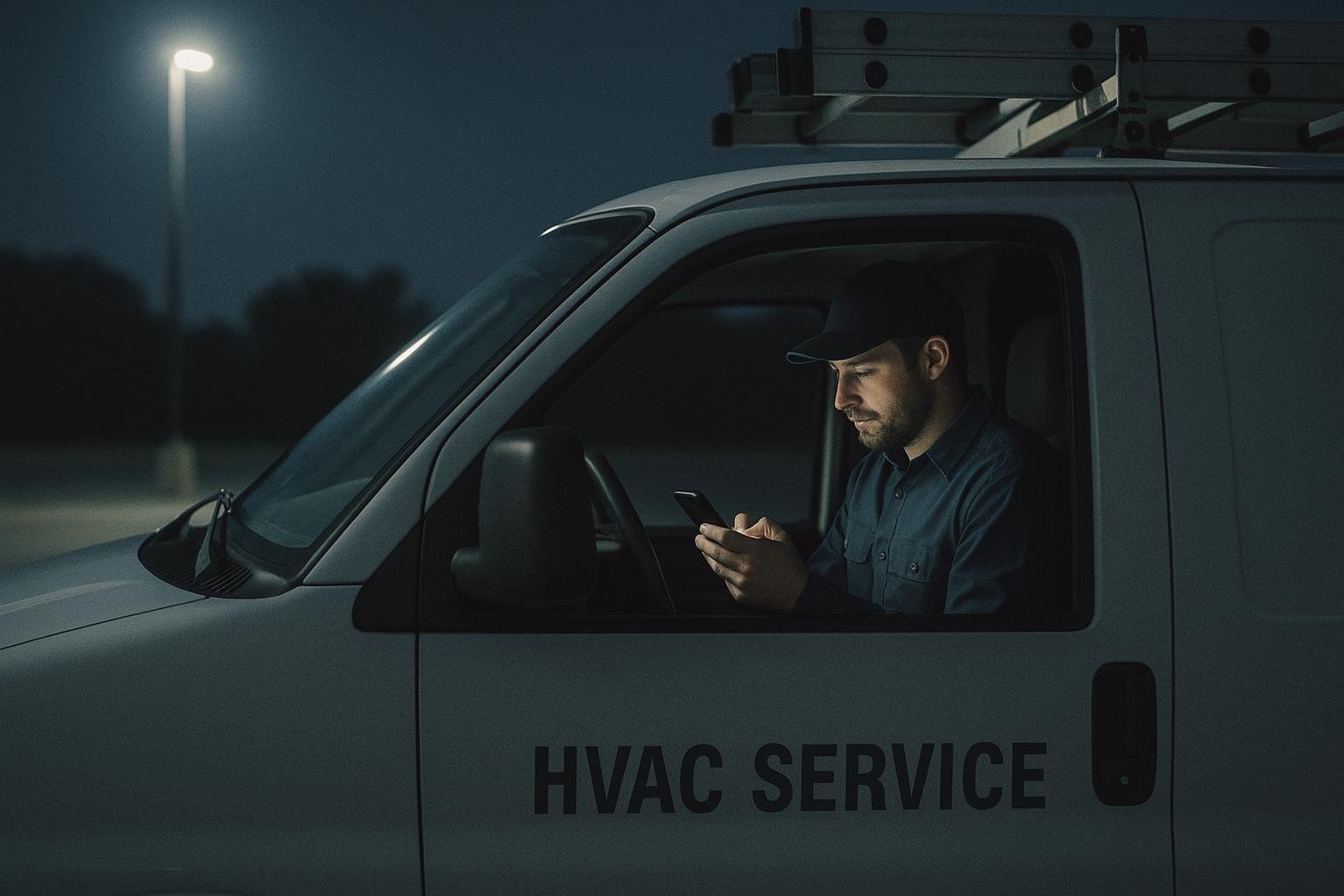
Picture this. It's 11:47 PM on a Tuesday in late January. The facilities manager for a mid-size office complex just got an alert — their rooftop unit is down, the building's dropping to 55 degrees, and they've got 200 employees showing up at 8 AM.
They pull up their vendor list. They call you first. Your phone rings four times. Voicemail kicks in. They hang up without leaving a message — facilities managers never leave messages on service lines, because they can't afford to wait — and they dial the next HVAC contractor on the list.
That contractor answers. Three seconds of ringing, then a calm voice: "Thanks for calling. We've got your info — what's the situation?" Twenty minutes later, your competitor has a tech rolling and a $5,200 work order locked in.
You wake up to nothing. Not even a missed call notification that tells you what you lost.
What the Stake Actually Is
Most HVAC contractors think about this as a missed call. I'd push back on that framing pretty hard. A single missed emergency call from a commercial client isn't a lost lead. It's a signal — a signal that you can't be relied on when it counts most.
And here's the part that stings: commercial facilities managers run multiple properties. They're managing SLAs that have response-time clauses baked in. If your voicemail picks up during an emergency, you haven't just lost that $5K service call. You've given them a reason to re-evaluate whether you belong on their preferred vendor list at all.
A single commercial maintenance contract can run $40,000 to $150,000 a year depending on the portfolio size. The missed call at midnight is just the event that starts the conversation about switching vendors. The real loss is everything that comes after it.
According to Bureau of Labor Statistics data, a full-time receptionist costs between $30,000 and $60,000 annually — and they still can't take calls at midnight. That's the staffing math that's kept the "just hire someone" answer off the table for most HVAC shops.
Why It Keeps Happening
I talk to a lot of HVAC business owners. The phone problem is almost never a surprise to them — they know it's happening. The honest answer for why it continues is usually one of three things.
Techs don't answer calls from unknown numbers on the job site. They're under a unit, hands full, and they've learned that most calls during work hours are either sales or complaints. So they let it ring.
The after-hours solution is a personal cell number. Either the owner's, or a rotating on-call tech. That works until it doesn't — until someone doesn't hear the phone, or until the call comes in during the two-minute window between pulling into the driveway and walking through the door. It also doesn't scale once you have more than a handful of commercial accounts.
IVR trees trained customers to hang up. If you've got an old phone system with a menu — "press 1 for service, press 2 for new installs" — some percentage of callers bail before they even get to a human. Emergency callers especially. They want a voice, not a menu.
None of these are laziness problems. They're structural problems. The phone infrastructure most HVAC companies are running wasn't designed for 24/7 commercial emergency response. It was designed for a 9-to-5 shop with a receptionist at a desk.
How Does an HVAC Answering Service Actually Work?
A dedicated hvac answering service powered by AI answers every inbound call — instantly, at any hour — without routing it to voicemail or a menu tree. The AI is trained on your business: your service area, your emergency protocols, your hours, your team structure. When a call comes in, it opens a conversation, not a recording.
Here's what that call flow actually looks like in practice:
- The call is answered in under one second. No rings, no hold music, no "our office is currently closed" message.
- The AI qualifies the issue in real time. Is this a full system failure or a performance complaint? Commercial or residential? How many people are affected? What's the address?
- Structured data is captured. Caller name, callback number, property address, system type, urgency level — all extracted automatically during the conversation.
- The call is handed off or escalated. For true emergencies, the AI can transfer the call to your on-call tech in real time. For routine requests, it captures the details and queues them for the morning team.
- The customer gets a confirmation. Automatic text and email recap of what was discussed and what happens next — so they know someone is on it, even at midnight.
That last step matters more than most people realize. The confirmation loop is what turns a phone interaction into a documented response. It's the difference between a facilities manager thinking "okay, someone's handling this" and them lying awake wondering if their vendor actually got the message.
We built CallagentAI's feature set around exactly this flow — qualification, capture, handoff, confirmation — because that's the sequence commercial clients actually need from their HVAC vendors.
What Does an HVAC Answering Service Cost?
This is a fair question and I'd rather answer it directly than bury it. Here's the honest comparison:
| Option | Annual Cost | 24/7 Coverage | Concurrent Calls |
|---|---|---|---|
| Full-time receptionist | $30,000–$60,000 | No | One at a time |
| Human answering service | $6,000–$18,000 | Sometimes | Limited |
| Owner's personal cell | $0 (but not free) | Unreliable | One at a time |
| AI hvac answering service | $600–$4,800 | Yes, always | Unlimited |
The math is pretty hard to argue with. An AI hvac answering service runs 87–97% cheaper than a full-time receptionist, it works every hour of every day, and it doesn't call in sick during a polar vortex when your phones are ringing off the hook. Check the CallagentAI pricing page for current plan details.
And honestly, one recovered emergency service call in January probably covers the entire year of service costs.
The Proof: Integration and the Confirmation Loop
The thing I hear most from HVAC owners when they first look at this is: "Okay, but what does it actually do with the information after the call?" That's the right question.
Here's what the data path looks like. The AI captures structured call data — caller name, property address, system issue, urgency level, callback number — and pushes it out via webhook. If you're running a field service app, you can wire that webhook through Zapier or Make so the job details land directly in your system without anyone having to type them in. No voicemail to transcribe, no sticky note on the dispatcher's desk, no "I thought someone was handling it."
For businesses that use Cal.com, routine service appointments can be booked directly during the call. For leads, Zoho CRM gets a record created automatically. The full integration picture is on the CallagentAI integrations page — but the core point is this: the call produces structured data your team can act on immediately, not a voicemail someone has to remember to check.
Then the confirmation loop closes it. The caller — your commercial client or their facilities manager — gets a text and an email within seconds of hanging up. It summarizes what was discussed, what happens next, and who to expect. That message does something quiet but important: it proves you responded. It's timestamped. It's documented. In a world where commercial contracts get reviewed at renewal time, that kind of responsiveness is exactly what keeps you on the preferred vendor list.
According to McKinsey research, companies that respond to customer inquiries fastest consistently win more business in competitive service markets — and HVAC emergency response is about as competitive as it gets.
I'll be direct: an hvac answering service isn't a nice-to-have for HVAC contractors with commercial accounts. It's closer to contract insurance. The accounts you're protecting are worth ten to a hundred times more than the cost of the tool protecting them. If you want to see how it works in practice, try a live demo — it takes about ten minutes and you'll hear exactly what your callers would hear.
Frequently Asked Questions
What is an HVAC answering service?
An HVAC answering service is a 24/7 call-handling system — AI-powered or human-staffed — that answers inbound calls to an HVAC business at any hour, qualifies the issue (emergency vs. routine), captures caller and job details, and either routes the call to a technician or schedules a service visit automatically.
How does an AI hvac answering service handle emergency calls differently from voicemail?
Unlike voicemail, an AI hvac answering service answers instantly, asks qualifying questions in real time, and can escalate urgent calls directly to your on-call technician. It captures structured data — address, system type, urgency level — and sends an automatic text and email recap to the caller so they know someone is responding, even at 2 AM.
Will a commercial facilities manager actually talk to an AI?
In our experience, facilities managers care about one thing: getting a response fast. An AI that answers in under one second, asks the right questions, and sends a confirmation text is a far better experience than four rings and a voicemail. Most callers don't know or care that it's AI — they know someone answered.
What does an HVAC answering service cost compared to a human receptionist?
A full-time human receptionist costs $30,000–$60,000 per year based on BLS salary data, offers no after-hours coverage, and handles one call at a time. An AI-powered HVAC answering service runs $600–$4,800 per year, is available 24/7/365, and handles unlimited concurrent calls — an 87–97% cost reduction with better availability.
Can the answering service push call data into my field service software?
Yes, via webhook. CallagentAI pushes structured call data — caller name, address, issue type, urgency — to any system through a webhook endpoint. If you run field service software like Jobber or ServiceTitan, you can wire that webhook through Zapier or Make and have job details arrive without anyone retyping them from a voicemail.
How quickly can I set up an HVAC answering service?
Setup takes under 10 minutes. You provide your business information, service area, emergency protocols, and any FAQs. The AI is trained on that information immediately — no multi-week onboarding, no technical expertise required. You can have it answering calls the same day you sign up.