
Why General Contractors Lose Projects to Better Communication Systems
A contractor answering service is the difference between winning a bid and watching it go to the guy who picked up the phone. When a property owner calls three contractors for estimates, the first one to respond almost always gets the job — and if your line goes to voicemail, you're not first. You're out.
- 62% of calls to small businesses go unanswered — in contracting, each one is a potential bid window closing.
- Project leads are time-sensitive: a caller who hits voicemail typically moves on within minutes.
- A human receptionist costs $30,000–$60,000 per year; an AI answering service runs $600–$4,800 per year.
- An AI contractor answering service qualifies, captures, and confirms every inbound call — automatically.
The Call You Missed at 7:48 AM
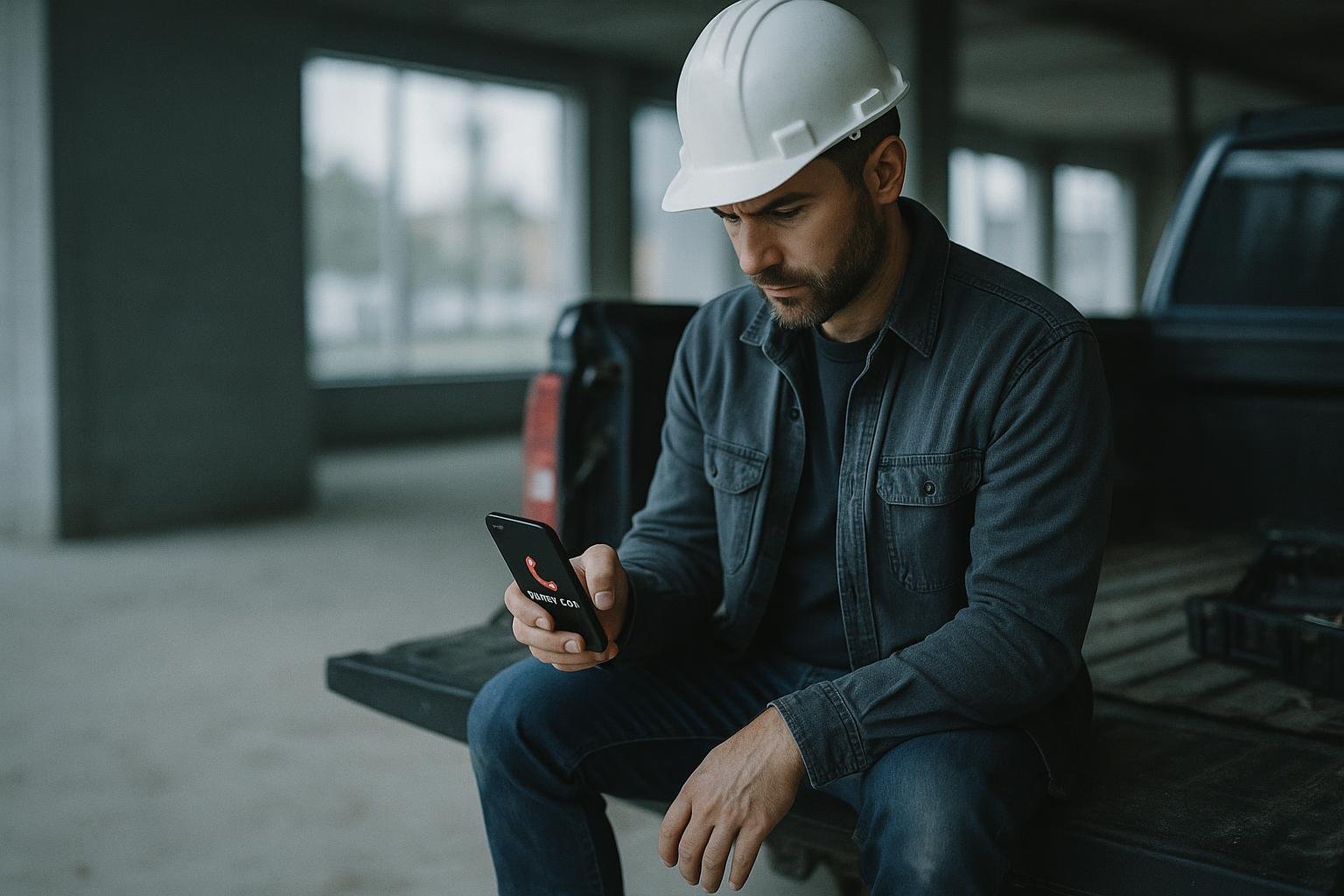
Picture this. You're on a roof in August, it's already 85 degrees, and your phone rings in your truck. By the time you climb down, strip a glove, and unlock the screen — voicemail. The caller was a property manager with a six-unit renovation. She needed an estimate this week because her board meets Friday.
You call back two hours later. She already has someone coming Thursday. She was polite about it. But she's gone.
That's not a communication failure. That's a systems failure. And it happens dozens of times a year to general contractors running lean crews — because the phone is ringing while you're doing the actual work.
What a Missed Bid Actually Costs
Let's be honest about the numbers here. A residential renovation job might be $15,000–$80,000. A commercial fit-out or facilities management contract can run $200,000–$600,000 over a year. Miss the intake call on either, and the loss isn't just that project — it's the relationship, the referral chain, and every repeat job that would have followed.
Contractors running on busy season (think spring through fall in most markets) often hit a brutal catch-22: the busier you are on site, the less capacity you have to answer new inquiries. So peak revenue season is also the season you're most likely to lose new work. Voicemail fills up. Callbacks happen eight hours late. The lead moved on before lunch.
According to the NFIB small business economic trends survey, staffing constraints are consistently cited as a top operating challenge for small contractors — and it doesn't just hit your crew size. It hits your phones.
Why the Phone Keeps Slipping
Here's the thing. Most contractors aren't ignoring their phones on purpose. The problem is structural.
You're a working owner or a small management team. You don't have a dedicated receptionist — that's a $40,000+ salary for someone sitting at a desk while you're out making money. So the phone rings to whoever's available, which during a job means nobody. Or it rolls to voicemail, which gets checked when someone has a minute, which in high season means never.
IVR trees that bounce callers through menus don't help — property managers and homeowners don't want to press 2 for estimates. They want a human-sounding voice that takes the details and confirms the next step. When that doesn't happen, they call the next contractor on the list.
The mechanism is simple: phones overflow → voicemail fills → leads time out → revenue walks out the door. No villain, just a system that was never built for the call volume busy season creates.
How Does a Contractor Answering Service Actually Work?
A contractor answering service powered by AI answers every inbound call in under one second — any time of day, any day of the year. It greets callers with your business name, handles the conversation in natural speech, and does four things on every call:
- Qualifies the inquiry in real time — emergency repair or new project estimate? Residential or commercial? Timeline?
- Captures the details as structured data — caller name, phone number, email, property address, scope description, urgency level.
- Books the estimate appointment — directly into your calendar via Cal.com, right on the call, no back-and-forth.
- Closes the loop — sends the caller an automatic text and email recap confirming what was discussed and what happens next.
That last piece matters more than people expect. A caller who gets a confirmation text — "Thanks, John will be there Thursday at 10 AM for your estimate at 142 Oak St" — doesn't call around anymore. The job is mentally booked. You just protected the lead.
Here's what that sounds like on a real call — a live demo of the AI handling an inbound appointment booking:
The conversation is natural, responsive, and handles follow-up questions without breaking. That's what callers experience on the other end when you run a contractor answering service like CallagentAI.
Before and After: Communication That Wins Work
The difference isn't subtle. Here's what the same call looks like with and without a proper answering system:
| Without a Contractor Answering Service | With a Contractor Answering Service |
|---|---|
| Phone rings, no answer | AI picks up in under 1 second |
| Caller leaves voicemail — or doesn't | Caller is greeted by name, inquiry is qualified |
| Voicemail sits until someone has time | Lead details captured instantly as structured data |
| Callback happens hours later | Estimate appointment booked on the call via Cal.com |
| Caller has already called two other contractors | Caller receives confirmation text — they're not calling anyone else |
| You find out about the lead at end of day | Dispatcher sees structured job details immediately |
The column on the right isn't a fantasy. It's what happens when your phone system is actually built for the volume your business generates at peak season. Check out the full features page to see how the qualification and capture flow is configured.
Why It Holds Up in the Field
I'll be direct about what makes this work versus what sounds good in a demo and falls apart in practice.
First, the handoff. When a call ends, the structured data — caller name, project type, address, urgency, notes — gets pushed out by webhook. If you run your jobs through a system like Buildertrend or Jobber, you can wire that webhook through Zapier and have the lead sitting in your system before you even finish the current call. No one types it in. No sticky note on a dashboard. The job is in the system.
Second, the confirmation loop. The automatic text and email recap after every call isn't just courtesy — it's documentation. On commercial accounts especially, a facilities manager who gets a written confirmation of the call (what was discussed, what happens next, when) is not going to call you back an hour later to check. That ambiguity is gone. And on a contract worth $400,000 a year, eliminating ambiguity is protecting the account.
Third, it scales. A contractor answering service running on AI handles unlimited concurrent calls. When a storm rolls through and five property managers call in the same hour, every single one gets answered. You can't hire for that spike. You can build a system that handles it.
The integrations page shows exactly how the webhook path works and which tools connect through it. And if you want to see what setup actually looks like — it's under 10 minutes — the demo page walks through it.
According to McKinsey's digital research, businesses that automate customer-facing response see measurably faster lead conversion — because speed of response is the single biggest predictor of whether an inquiry becomes a sale. In contracting, that's not theory. You've lived it.
What Does a Contractor Answering Service Cost?
A human receptionist to handle your phones full-time runs $30,000–$60,000 per year in salary alone, before benefits, training, and turnover. An AI contractor answering service runs $600–$4,800 per year depending on call volume and plan — an 87–97% reduction in cost for equivalent availability, and the AI is available 24/7 without sick days or lunch breaks.
For most two- to five-person contracting operations, the math is straightforward: one commercial lead that would have gone to voicemail, now captured and booked, pays for the system for the year. The pricing page has the current plan breakdown.
The virtual receptionist market sits at roughly $4.64 billion in 2026 and is projected to reach $10.85 billion by 2035 — because businesses across every trade are running this calculation and arriving at the same answer.
Frequently Asked Questions
What is a contractor answering service?
A contractor answering service is a system — AI-powered or human-staffed — that handles inbound calls on behalf of a contracting business. It answers calls 24/7, qualifies the inquiry, captures lead details, books estimate appointments, and confirms next steps with the caller. AI-based services do this automatically, without human operators, at a fraction of the cost.
Will callers know they're talking to an AI?
Modern AI voice agents use natural-sounding speech that handles conversation fluidly, including interruptions and follow-up questions. Most callers complete the call without issue. If a caller specifically asks to speak with a person, the system can transfer the call to a human agent. The goal is a caller who gets their question answered and their appointment booked — not a caller who's interrogating the system.
Can a contractor answering service book estimates directly into my calendar?
Yes. CallagentAI integrates directly with Cal.com, so the AI agent can check real-time availability and book estimate appointments during the call itself. The caller gets a confirmation text and email immediately after. No manual scheduling step, no back-and-forth phone tag. The appointment lands in your calendar before the call ends.
How does the call data get into my project management system?
CallagentAI pushes structured call data — caller name, phone, email, project type, urgency, notes — out through a webhook after every call. If you use a tool like Buildertrend, Jobber, or a CRM, you can connect that webhook through Zapier or Make and have the lead appear in your system automatically. There's no native connector to those apps, but the webhook path gets you there without anyone manually re-entering the information.
What happens during peak season when call volume spikes?
An AI contractor answering service handles unlimited concurrent calls — every line answered at the same time, no busy signals. During storm events, spring estimate rushes, or any other surge, every caller gets through. You capture leads that a human answering service or voicemail would have dropped. That's the single biggest operational advantage over traditional phone handling at peak season.
How long does it take to set up?
CallagentAI is configured in under 10 minutes. You provide your business information, FAQs, hours, and how you want calls handled. The AI trains on that information and is ready to answer calls immediately. No technical expertise required, no long onboarding period. Most contractors are live the same day they sign up.