
Why Plumbers Miss Emergency Calls at 9 PM (And What It Costs)
After hours plumbing answering is what separates the plumber who lands a $1,500 emergency job on a Sunday night from the one whose phone rang out and lost it to Roto-Rooter. When a pipe bursts at 9 PM, the homeowner calls the first number that picks up — and if that's not you, the job is gone before you even know it existed.
- 62% of calls to small businesses go unanswered — and emergency calls go straight to your highest-paying competitors.
- A single missed weekend emergency call can represent $1,500 or more in lost revenue.
- AI-powered after hours answering answers in under one second, qualifies the urgency, and captures the caller's details automatically.
- The caller gets a text confirmation; you get structured job data — without anyone manually typing it in.
The 9 PM Call You Never Heard
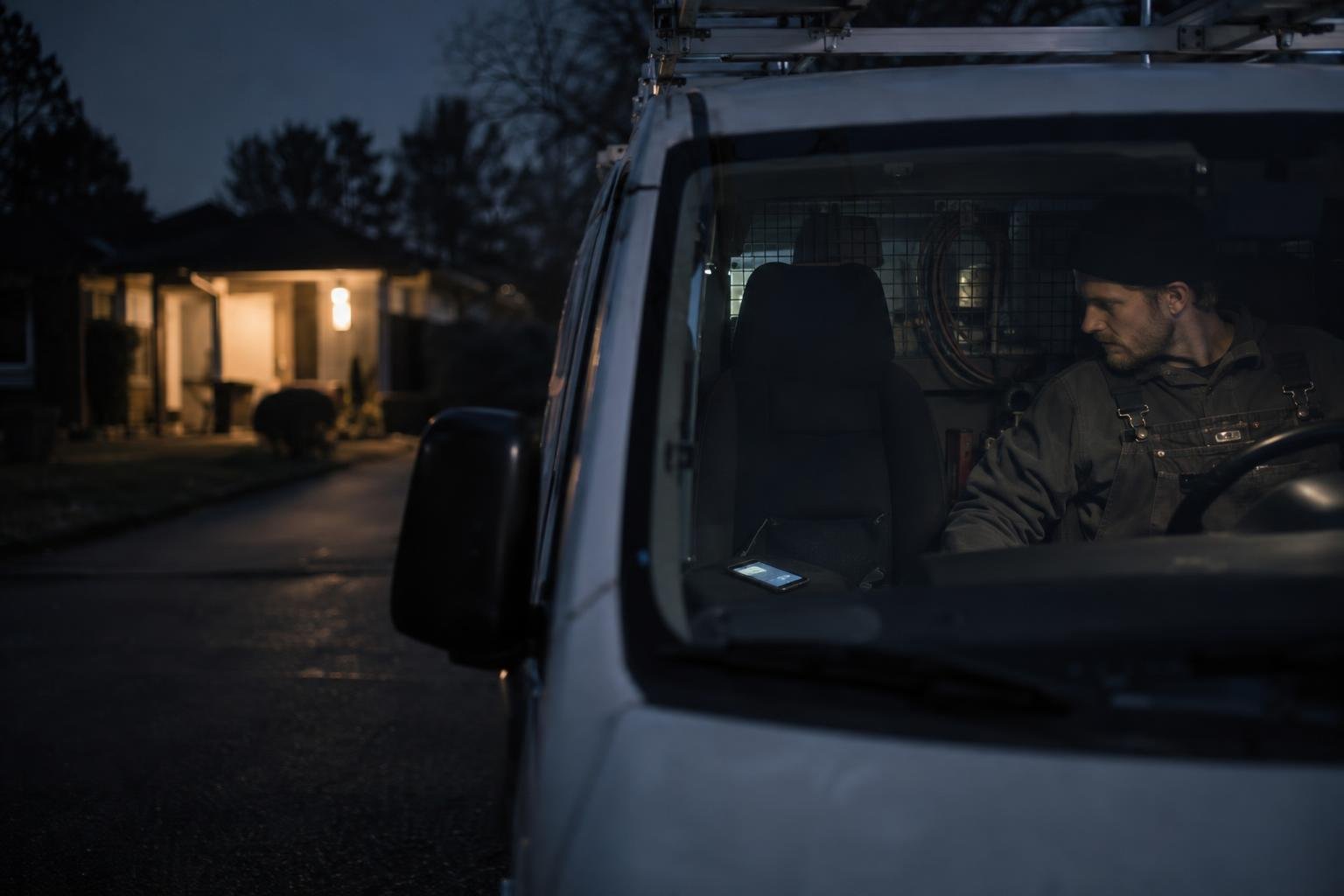
It's Sunday. You finished a long week — three service calls Friday, a full day Saturday. Your phone's on the charger, ringer off. Maybe voicemail's full from the week's estimates. A homeowner in your zip code just walked into their basement and found two inches of standing water. Burst pipe. Panic. They grab their phone and search "emergency plumber near me."
Your listing comes up. They call. It rings out. Or they hit a generic voicemail. Either way, they hang up after fifteen seconds and dial the next result. Roto-Rooter picks up on the second ring. That job — probably $1,200 to $1,800 for an emergency weekend call-out — is gone. And you'll never know it happened.
This isn't a rare edge case. It's happening every weekend, every holiday, every night your guys are off the clock.
What a Missed Emergency Call Actually Costs You
Let's put real numbers on it. Emergency plumbing call-outs — burst pipes, backed-up sewers, flooding — routinely run $800 to $2,000 depending on the job and your market. Miss two of those a month and you're leaving $20,000 to $48,000 on the table every year. Not "inefficiency." Not "lost productivity." Actual revenue that walked straight to your competitor because your phone wasn't answered.
And here's the part that stings more than the dollar figure: emergency callers are not comparison shopping. They have water on the floor. They call the first number that picks up. That means first-to-answer wins every single time, and second place gets nothing. There's no callback, no second chance. The job goes to whoever answered.
The larger franchise operators — your Roto-Rooters, your Mr. Rooters — figured this out years ago. They staff call centers around the clock. You can't match that headcount. But you can match their availability. That's the entire game.
Here's what it looks like when a caller hits voicemail instead of a live answer — and why that's a job you've already lost:
Why After Hours Calls Keep Getting Missed
Honestly, most independent plumbing shops aren't set up for this — and it's not laziness or bad business instincts. It's just the reality of running a small crew.
Your options until now have been:
- Answer the phone yourself, all night. Works until it doesn't. You can't sleep, you burn out, and your family notices.
- Hire an on-call dispatcher. Costs $3,000–$4,000 a month for a good one. That's $36,000–$48,000 a year just to cover the phones.
- Use a traditional answering service. Human operators who take a message, read it back wrong, and email you a form at 7 AM. The caller called four other plumbers by then.
- Let it go to voicemail. This is what most shops actually do. And it's what's costing you.
The mechanism is simple: nights, weekends, and holidays are exactly when plumbing emergencies happen most — and they're exactly when your operation is least staffed to handle them. The gap between when calls come in and when you can respond is where the revenue bleeds out.
How Does After Hours Plumbing Answering Actually Work?
An AI-powered after hours plumbing answering service picks up every call in under a second — not a voicemail prompt, an actual live-sounding voice that knows your business. It asks the caller what's going on, qualifies the urgency (burst pipe vs. slow drain vs. "my toilet runs sometimes"), captures their name, address, phone number, and what's happening, and then tells them exactly what happens next.
That last part matters more than people realise. The caller in a panic needs to know someone is handling it. The AI confirmation — "Got it, we've logged your emergency and someone will be in touch within the hour" — plus an automatic follow-up text does exactly that. The caller stops dialling anyone else. You've held the job even before you've called back.
On your end, you get a structured summary: caller name, address, problem type, urgency level. Not a voicemail you have to replay three times. Not a form someone filled out at midnight with typos. A clean data record you can act on immediately. If you run a dispatching tool, that data can flow out through a webhook and into your system automatically — no manual re-entry, no one having to listen to a recording and type it in.
That's what CallagentAI is built to do for trades businesses like yours. The full feature set includes real-time call qualification, automatic SMS and email recap to the customer, call transfer to your on-call tech when needed, and clean call transcripts you can review in the morning.
Before and After: What Changes
| Without After Hours Answering | With AI After Hours Plumbing Answering |
|---|---|
| Phone rings out or hits full voicemail | Answered in under 1 second, every time |
| Caller hangs up and dials a competitor | Caller confirmed, job held, text sent |
| You find out at 7 AM — job's long gone | Structured alert hits your phone immediately |
| No record of the missed opportunity | Full transcript, caller info, urgency level logged |
| Human dispatcher costs $3,000–$4,000/month | CallagentAI starts at $45/month (Growth AI $120/month) |
| One call at a time — busy signal during surges | Unlimited concurrent calls — no busy signal ever |
That cost difference alone tells the story. According to Bureau of Labor Statistics data, a full-time receptionist runs $30,000–$60,000 a year in salary alone — before benefits, before overtime. An AI after hours plumbing answering system costs a fraction of that and never calls in sick the week of Christmas.
The Handoff That Closes the Loop
Here's what I see shop owners miss when they think about after hours answering: the value isn't just in picking up the call. It's in what happens to that call data afterward.
Old-school answering services take a message. Full stop. Someone types it into a form. You get an email at 2 AM that you won't see until 7. By then, three other plumbers have already talked to your customer. The message might as well not exist.
What actually retains the job is the confirmation loop. The AI picks up, qualifies the emergency, captures the details — and then immediately sends the caller a text: "We've got your information. Emergency logged. You'll hear from us within the hour." That text is proof of response. The homeowner stops dialling. They wait for you.
At the same time, the structured call data — name, address, problem type, urgency — gets pushed out automatically. If you're running a field service tool, your team can wire that data through a webhook into whatever platform you use, so the job is sitting there for your dispatcher before you've even had your first coffee. No retyping. No delay. No "I thought someone was handling that." Check out our integrations page to see how the data handoff works.
The pricing starts low enough that you recover the cost on a single emergency call — and you're picking up calls like that every weekend you would have otherwise missed.
Picture a two-van plumbing operation running through a February cold snap. Pipes are freezing all over town. The phone's ringing off the hook during the day, and it keeps ringing at 10 PM after the guys go home. Without after hours plumbing answering, those night calls hit voicemail. With it, the AI qualifies each one — real emergency vs. "can this wait until tomorrow?" — captures the address and problem, sends the caller a confirmation text, and queues the genuine emergencies for a callback. Same two vans, same crew, but now the owner wakes up to a prioritised list instead of four missed calls and four jobs already claimed by the competition.
That's not a hypothetical outcome. That's what structured after hours plumbing answering is designed to produce.
If you want to hear what it actually sounds like on a live call, you can try a demo and see for yourself. No sales call, no commitment — just the product doing what it does.
Frequently Asked Questions
What is after hours plumbing answering?
After hours plumbing answering is a service — traditionally human operators, now increasingly AI — that picks up customer calls outside your business hours. An AI version answers in under a second, qualifies the caller's urgency, captures their contact details and problem description, sends them a confirmation text, and delivers structured job data to your team automatically.
How much does an after hours plumbing answering service cost?
Traditional human answering services run $200–$600 a month for limited minutes. CallagentAI's after hours plumbing answering starts at $45 a month, and most busy plumbing shops fit Growth AI at $120 a month (~750 minutes at the standard rate), compared to $30,000–$60,000 a year for a full-time receptionist. Most plumbing shops recover the monthly cost on a single emergency call.
Will callers know they're talking to an AI?
Modern AI voice agents sound natural and respond in real time — not like the robotic IVR systems from ten years ago. The agent knows your business name, your service area, and how to handle common plumbing emergencies. Most callers focus on getting help fast; a confident, responsive voice that takes their details and confirms next steps is exactly what they need at 10 PM.
What happens to the call data after the AI answers?
Every call produces a structured record: caller name, phone number, address, problem type, and urgency level. That data is delivered as a transcript and summary to your team immediately. It can also be pushed through a webhook into your existing dispatching or CRM platform automatically — so no one has to manually re-enter what the caller said.
Can the AI transfer a call to my on-call technician for true emergencies?
Yes. You can configure call transfer rules so the AI qualifies the urgency first and then routes genuine emergencies — burst pipes, active flooding, no heat in winter — directly to your on-call number. Routine calls get logged and queued for the morning, so your tech isn't woken up at 2 AM for a slow drain that can wait until Monday.
How quickly can I set up after hours plumbing answering for my shop?
Setup takes under 15 minutes. You provide your business name, service area, FAQs, and any specific instructions for how the agent should handle emergencies versus routine calls. The agent is trained on that information and ready to answer calls the same day. No technical expertise required, and you can update the configuration anytime from your dashboard.